The Hour the Day Goes Quiet: A Small Sound Ritual for the Late-Afternoon Dip
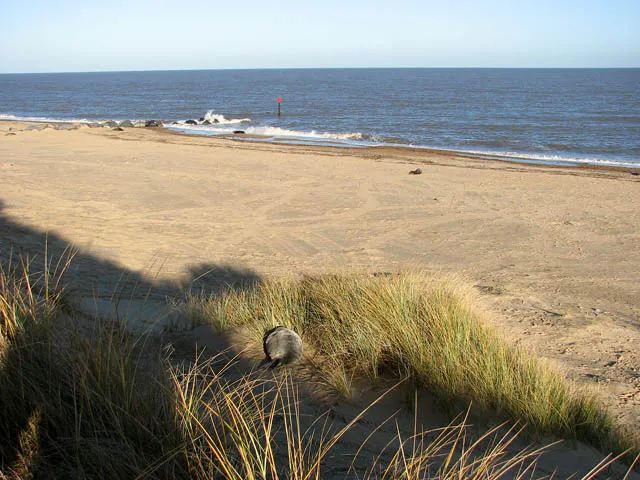
Photo: Evelyn Simak, CC BY-SA 2.0, via Wikimedia Commons
At about four o'clock, something in the day changes gear. The light has already begun to thin, the kettle feels further away than it did at lunchtime, and the list of things you meant to do has started to look like a foreign language. If you live in the UK, this may feel sharper in the weeks after the clocks go back, when dusk arrives before the school run is even over and the sky outside the window has that flat, grey-blue look.
That hour has a name in a lot of households: the 4pm fade. It is not dramatic. It is not usually a crisis. It is more like a dimmer switch being turned down while you are still trying to read the room.
A dip, not a defect
Late-afternoon fatigue is not a moral failing. Bodies have rhythms. Light affects mood and alertness. Blood sugar, sleep, medication, grief, money worries, and the general weight of the news all have a say too. Add a darker commute and a cold snap, and it makes sense that your energy might leave the building before you do.
So this is not a guide to squeezing one more task out of the day. It is a small ritual for the hour when your energy runs out — comfort first, productivity a distant second.
The ritual, in three small parts
1. Low-stimulation sound
Choose something with no lyrics and no urgency. A single piano note held for a long time. Rain on canvas. A wash of ambient hum. A playlist called something like 'quiet' that you do not have to curate. Ten minutes is plenty. Low volume. Phone face down, or in another room if that is easier.
The aim is not to soundtrack your way to peak efficiency. It is to give your nervous system a patch of soft edges. If you are on a bus, in a staff room, or sitting in a car outside a supermarket, headphones will do. You do not need a candle and a yoga mat. A blanket and a closed door are enough.
2. One slow breath
You do not need to breathe perfectly. Try a longer exhale: in through your nose for a count of four, out through your mouth for six. Do that three times. If counting makes you tense, just make the out-breath slightly longer than the in-breath. That is the whole exercise. One breath is allowed. Three is generous. You are not training for anything.
If you notice yourself thinking 'I am bad at this', that is just the 4pm fade talking. Let the thought pass. Take another slow out-breath.
3. A boundary-setting script
Sometimes the 4pm fade is not only about energy. It is about the next demand arriving before you have had a chance to land. A small script can help: 'I'm going to take ten quiet minutes before I answer that. I'll come back to you after.' Or: 'I can't do that justice right now. Can we look at it in the morning?'
You are allowed to say this without a detailed medical report. You do not have to explain your sleep, your iron levels, or your childhood. A simple boundary is not a rejection. It is a door held open for later.
Comfort, not productivity
None of this will make you a different person by 5pm. It is not meant to. The point is to stop treating the dip as an emergency. You are not failing at the day because you need a quiet ten minutes before the evening starts.
Rest is allowed. Coping tools can be tiny. A ten-minute sound ritual on the sofa with a blanket counts. A slow breath before you open the front door counts. A text that says 'Can we talk tomorrow?' counts. You do not have to earn comfort by being more productive first.
If the fade is heavier than a fade
Some late-afternoon crashes are seasonal. Some are about sleep, food, medication, grief, money, or loneliness. If the dip is lasting longer, getting heavier, or coming with hopelessness, please talk to your GP or a trusted person. You do not have to wait until it is unbearable to ask for help. Samaritans are available on 116 123 if you need to talk tonight.
For now, though, keep it small. Let the light go early. Put something gentle on. Take one slow breath. The hour can be quiet, and you can be allowed to be quiet with it.