Just Turn Up: The Quiet Relief of Care Without an Appointment
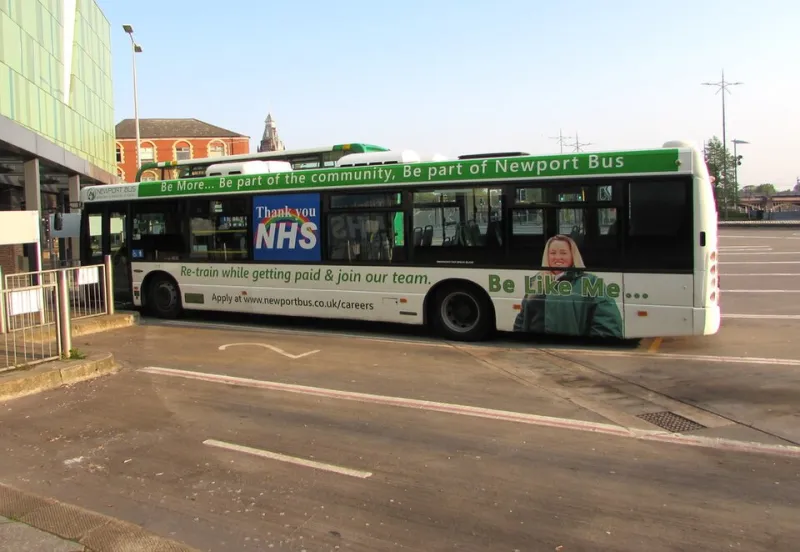
Photo: Jaggery, CC BY-SA 2.0, via Wikimedia Commons
There are days when making an appointment is the hardest part. Not the waiting room, not the conversation, not even the thing you need help with. Just the booking. The phone call, the online form, the diary negotiation, the sense that you have to know exactly what is wrong and exactly when you’ll be ready to discuss it. Sometimes the door that asks you to knock in advance is simply too heavy.
That is where the quieter, lower-threshold bits of the NHS and community support come in. The walk-in centre. The pharmacy consultation room. The drop-in listening space that doesn’t need your life story at reception. Places you can arrive at unannounced, be met with a clipboard, and sit down without having to perform a neat version of yourself first.
The appointment you didn’t have to make
Booked appointments are brilliant for lots of things. They are planned, protected and usually better for continuity. But they also ask something of you in advance: that you can predict how you’ll feel on a particular Tuesday at 10:40am, that you can hold the intention for a week, that the act of arranging help doesn’t use up the energy you needed for actually getting it.
For some of us — especially when anxiety is high, mood is low, or life is generally running at a reduced capacity — that is a big ask.
A walk-in service flips the order. You don’t have to commit in advance. You turn up, take a ticket or join a queue, and let the system do a bit of the holding. There may still be a wait. There may still be questions. But the first step is just being there, and sometimes that is the only step you can manage.
It is not a lesser form of care. It is a different doorway.
What low-threshold care actually looks like
In the UK, this can mean a few things. An NHS walk-in centre or urgent treatment centre, where you can go without an appointment for certain urgent but not life-threatening problems. A community pharmacy, where you can ask for a private conversation in the consultation room and get advice on minor ailments, medicines and, in many areas, treatment under schemes such as Pharmacy First. A drop-in listening space, peer support group or warm hub where the offer is company, a brew and someone trained to listen rather than a diagnosis.
The details vary by area, and opening hours can be gloriously inconsistent. So it helps to check what is nearby before you need it, if you can. But the principle is the same: low threshold, low performance, low demand on your planning brain.
And that matters. Because when you are already stretched, being asked to jump through several hoops before you are allowed to feel better can feel like a quiet punishment.
The clipboard is not an interrogation
One of the kindest things about these spaces is the paperwork. A form is not a test. It is a way for you to say the difficult thing without having to say it out loud first. You can write “I’ve been feeling low” or “I keep getting panic attacks” or “I don’t know, I just don’t feel right” and hand it over. The clipboard does some of the talking for you.
If you find spoken words hard, bring a note on your phone. Write down three things: what’s been happening, how long it’s been going on, and what you are most worried about. You do not need to make it tidy. You do not need to use the right terminology. “Wobbly” is a perfectly valid word.
At the counter, you can keep it simple: “I’d like to speak to someone privately, please.” Or: “I’m not sure if this is the right place, but I need a bit of help.” That is enough. You are not being assessed on your opening line.
How to use these places kindly
Low-threshold does not mean thoughtless. A few small things can make the experience gentler for you and for the people working there.
First, check the basics. Is it walk-in or do you need to call ahead? What are the hours? Is it for urgent problems, minor ailments, or listening support? A two-minute look at the NHS website or a phone call can save you a wasted trip.
Second, go early if you can. Walk-in services often get busier as the day goes on, and waiting is easier when you are not already exhausted.
Third, take something to do. A book, headphones, a podcast, a snack. Waiting rooms are strange little pockets of time. Having a small anchor helps.
Fourth, know that you can leave. If the wait is too long or the space feels wrong, you are allowed to go home and try again another day. Turning up is not a contract.
And fifth, be gentle with the staff. They are often doing a difficult job in a stretched system. You do not have to be cheerful or grateful or easy. You just have to be there. That is enough.
A softer first step
Not every problem needs a walk-in centre. A sprained ankle and a spiral of intrusive thoughts are not the same thing, and it is worth being honest about what each service is for. For anything life-threatening, call 999. For urgent advice when you are not sure where to go, NHS 111 can point you in the right direction.
But for the in-between days — when you need someone to look at something, or listen to something, or simply confirm that you are not making a fuss — a no-appointment option can be a softer first step. It asks less of you. It leaves the door open.
Sometimes getting help is not about being organised. It is about being somewhere, with a clipboard, and letting that be the beginning. The long way round to the surgery is still a way in.